
Paella is one of Spain’s most iconic dishes, famous for its rich flavors, vibrant colors, and delicious combination of rice, seafood, meat, and spices. While saffron and rice often receive the most attention, choosing the best olive oil for cooking paella is equally important. The right olive oil enhances flavor, improves texture, and helps create an authentic Spanish cooking experience.
In this guide, you will learn how to choose the best olive oil for paella, which olive varieties work best, and why olive oil plays such a critical role in traditional Spanish cuisine.
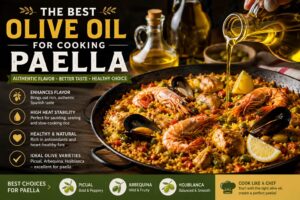 Why Olive Oil Matters in Paella
Olive oil is the foundation of authentic paella. It is used to sauté vegetables, cook proteins, and infuse the rice with flavor. Since paella is traditionally cooked over high heat, selecting the right olive oil can significantly affect the final result.
A high-quality olive oil helps:
- Build deep flavor
- Prevent ingredients from sticking
- Create better texture in the rice
- Add richness without overpowering the dish
- Support even cooking
Spanish chefs often consider olive oil one of the most essential ingredients in paella preparation.
What Is the Best Olive Oil for Cooking Paella?
The best olive oil for cooking paella is usually extra virgin olive oil (EVOO) from Spain. Spanish olive oils provide the authentic Mediterranean flavor profile associated with traditional paella recipes.
However, not all olive oils are identical. The best option depends on:
- Flavor intensity
- Smoke point
- Olive variety
- Type of paella being prepared
For most paella recipes, a medium to robust Spanish extra virgin olive oil works best.
Why Spanish Olive Oil Is Ideal for Paella
Spain is the birthplace of paella, especially the Valencia region. Spanish olive oils are naturally paired with traditional paella ingredients and cooking techniques.
Benefits of Spanish olive oil include:
- Excellent flavor balance
- High antioxidant content
- Superior freshness
- Great heat stability
- Authentic Mediterranean taste
Spanish olive oil complements saffron, paprika, garlic, seafood, chicken, rabbit, and vegetables commonly used in paella.
Extra Virgin Olive Oil vs Regular Olive Oil for Paella
Many home cooks wonder whether they should use extra virgin olive oil or standard olive oil for cooking paella.
Extra Virgin Olive Oil (EVOO)
Advantages:
- Rich flavor
- High-quality nutrients
- Authentic aroma
- Natural antioxidants
Best for:
- Traditional paella
- Seafood paella
- Vegetable paella
Regular Olive Oil
Advantages:
- Milder flavor
- Lower price
- Suitable for high-volume cooking
Best for:
- Large gatherings
- Budget-friendly recipes
For authentic Spanish paella, extra virgin olive oil remains the top choice.
Best Olive Varieties for Paella
Different olive varieties create unique flavor profiles. Some varieties are better suited for paella than others.
Picual Olive Oil
Picual is one of the best olive oils for cooking paella because of its stability and bold flavor.
Characteristics:
- Peppery finish
- Rich aroma
- High smoke point
- Excellent for high-heat cooking
Picual olive oil works especially well with seafood and mixed paella recipes.
Arbequina Olive Oil
Arbequina olive oil has a smoother and fruitier taste.
Characteristics:
- Mild flavor
- Buttery texture
- Slight sweetness
This variety is ideal for delicate seafood paella and vegetable paella.
Hojiblanca Olive Oil
Hojiblanca offers a balanced taste between mild and robust.
Characteristics:
- Herbal notes
- Smooth finish
- Medium intensity
It pairs well with chicken paella and traditional Valencian recipes.
Best Olive Oil Brands for Cooking Paella
There are many excellent Spanish olive oil brands available worldwide. Here are some highly respected options for paella cooking.
Oro Bailén
Oro Bailén produces premium Picual olive oil with intense freshness and balanced flavor.
Castillo de Canena
This award-winning Spanish brand offers gourmet olive oils perfect for authentic paella recipes.
La Española
La Española is a traditional Spanish brand widely used in Mediterranean cooking.
Bertolli España
Bertolli offers accessible olive oil options suitable for daily cooking and paella preparation.
Casas de Hualdo
Casas de Hualdo produces high-quality EVOO with exceptional aroma and heat stability.
How Olive Oil Affects Paella Flavor
Olive oil is not simply a cooking fat in paella. It contributes directly to the flavor profile.
A strong olive oil creates:
- Richer aroma
- More depth
- Traditional Spanish taste
A mild olive oil creates:
- Cleaner seafood flavor
- Lighter texture
- More subtle finish
The best choice depends on personal preference and the type of paella you are making.
Best Olive Oil for Seafood Paella
Seafood paella requires balance because delicate seafood flavors can easily be overwhelmed.
Recommended olive oils:
- Arbequina EVOO
- Mild Hojiblanca EVOO
These oils enhance shrimp, mussels, squid, and fish without overpowering them.
Best Olive Oil for Valencian Paella
Traditional Valencian paella often includes chicken, rabbit, green beans, and saffron.
Recommended olive oils:
- Picual EVOO
- Medium-intensity Hojiblanca
These oils stand up well to hearty ingredients and open-fire cooking methods.
Best Olive Oil for Vegetable Paella
Vegetable paella benefits from fresh and fruity olive oil.
Recommended varieties:
- Arbequina
- Organic extra virgin olive oil
These oils complement roasted vegetables and herbs beautifully.
Smoke Point and Cooking Performance
One reason olive oil works so well for paella is its cooking stability.
Extra virgin olive oil generally has a smoke point between 375°F and 410°F, which is suitable for paella cooking temperatures.
Benefits include:
- Better heat resistance
- Reduced oxidation
- Enhanced flavor retention
High-quality Spanish EVOO performs especially well in traditional paella pans.
Traditional Spanish Cooking Techniques with Olive Oil
Authentic paella preparation begins with olive oil heated in a wide paella pan.
The olive oil is used to:
- Sauté garlic and onions
- Brown meat or seafood
- Cook vegetables
- Toast rice slightly before adding broth
This process develops the famous “sofrito,” which forms the flavor base of paella.
Without quality olive oil, the sofrito lacks depth and richness.
Health Benefits of Olive Oil in Paella
Using olive oil in paella not only improves taste but also adds nutritional value.
Heart-Healthy Fats
Olive oil contains monounsaturated fats that may support cardiovascular health.
Rich in Antioxidants
Extra virgin olive oil contains polyphenols and vitamin E.
Anti-Inflammatory Properties
Natural compounds in olive oil may help reduce inflammation.
Mediterranean Diet Benefits
Paella made with olive oil fits well within the Mediterranean diet, which is associated with overall wellness and longevity.
How Much Olive Oil Should You Use in Paella?
The amount of olive oil depends on the recipe size and ingredients.
General guideline:
- 3 to 5 tablespoons for a standard family-sized paella
Too little oil may cause sticking and uneven cooking. Too much oil can make the rice greasy.
Balance is important for achieving authentic texture and flavor.
Common Mistakes When Choosing Olive Oil for Paella
Using Low-Quality Oil
Cheap blended oils may lack flavor and freshness.
Choosing Overly Bitter EVOO
Extremely bitter olive oils can dominate the dish.
Ignoring Freshness
Fresh olive oil delivers better aroma and nutritional value.
Using Flavored Oils
Infused oils can interfere with traditional paella flavors.
Organic Olive Oil for Paella
Organic Spanish olive oil is increasingly popular among home cooks and professional chefs.
Benefits include:
- Cleaner production methods
- Natural olive cultivation
- Rich authentic flavor
Organic EVOO is an excellent option for premium homemade paella.
How to Store Olive Oil Properly
Proper storage helps preserve flavor and quality.
Tips:
- Store away from sunlight
- Keep in a cool location
- Use airtight containers
- Avoid excessive heat exposure
Fresh olive oil produces better cooking results and more authentic paella flavor.
Tips for Cooking Perfect Paella with Olive Oil
Use a Wide Paella Pan
A proper paella pan ensures even heat distribution.
Heat the Oil Slowly
Avoid overheating the olive oil before adding ingredients.
Build a Flavorful Sofrito
Take time to sauté onions, garlic, tomatoes, and spices properly.
Do Not Overcrowd the Pan
Ingredients should cook evenly and absorb the olive oil flavor.
Allow the Rice to Form Socarrat
The crispy rice layer at the bottom is one of paella’s most prized features.
Final Thoughts
Choosing the best olive oil for cooking paella can dramatically improve both flavor and authenticity. Spanish extra virgin olive oil remains the top choice because it delivers the rich Mediterranean taste that defines traditional paella.
Whether you are making seafood paella, Valencian paella, or vegetable paella, selecting the right olive oil helps create better texture, deeper flavor, and a more enjoyable cooking experience.
Picual, Arbequina, and Hojiblanca olive oils are among the best options for paella lovers who want restaurant-quality results at home. By using fresh, high-quality Spanish olive oil, you can elevate your paella and bring authentic Spanish cuisine directly to your kitchen.